You get paid.
For maybe four hours, you feel okay.
Then the mental math starts.
Rent. Car. Groceries. Insurance. The subscription you keep forgetting about. The prescription. The friend's birthday dinner you said yes to because you technically could afford it — except you couldn't, not really, not without everything getting tight again by Wednesday.
And you're left staring at a balance that somehow disappeared in less than a week.
You're not irresponsible. You're not careless. You're not making bad choices.
You're just trying to stretch one paycheck across a life that doesn't pause for your pay cycle.
So you did what everyone tells you to do.
You downloaded the budgeting app. You built the categories. You promised yourself you'd check it every day. And for about a week and a half, you were that person — the one with the color-coded spending tracker and the screenshot of your "progress."
Then the car needed something.
One category went over. The whole thing felt ruined. And you stopped opening the app.
You tried the 50/30/20 rule. Looked simple on paper. Except when rent and transportation already eat more than 50% of what you bring home, those clean little percentages don't make your actual life fit inside them.
You cut subscriptions. Saved maybe $40 a month. Still stressed.
You tried willpower. Just stop spending. Lasted three days.
You set up automatic savings transfers. Then got two overdrafts and canceled everything because somehow saving money was making your financial situation worse.
Every time, the same ending: the plan broke, you blamed yourself, and the next paycheck became the one where you'd finally get it together.
Sound familiar?
Here's what nobody told you: the plans didn't fail because of you. They failed because they weren't built for the way your money actually works.
The reframe
Every budgeting system you've ever tried was designed around one assumption: that you have money sitting in your account waiting to be allocated perfectly.
But that's not how a paycheck works.
A paycheck arrives all at once. And the moment it does, every bill, expense, surprise, and ordinary Tuesday starts fighting for it from the same pile.
Which means the only question that actually matters isn't "how do I spend less?"
It's: "What does this paycheck need to do before the next one arrives?"
That one question changes everything.
From the author
I Thought I Was Bad With Money

My name is Tessa.
For years, I'd get paid on Friday and feel anxious by Tuesday — not because I was spending recklessly, but because between rent, the car payment, groceries, and the occasional unexpected expense, the paycheck just disappeared.
I tried everything. Budgeting apps — abandoned after a week and a half. The 50/30/20 rule — impossible when rent already took more than 50%. Cutting subscriptions — saved $40 and was still stressed. Automatic savings that triggered two overdrafts and got canceled.
Every attempt ended the same way: the plan broke, and I blamed myself.
Then one Sunday — four days before my next paycheck — I checked my balance and saw $23. Enough for gas. Not enough for anything to go wrong. I sat with that number for a long time. Not panicking. Just done. Done pretending the next plan would be different.
That night, I wrote down one question: What does this paycheck need to do before the next one arrives?
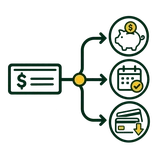
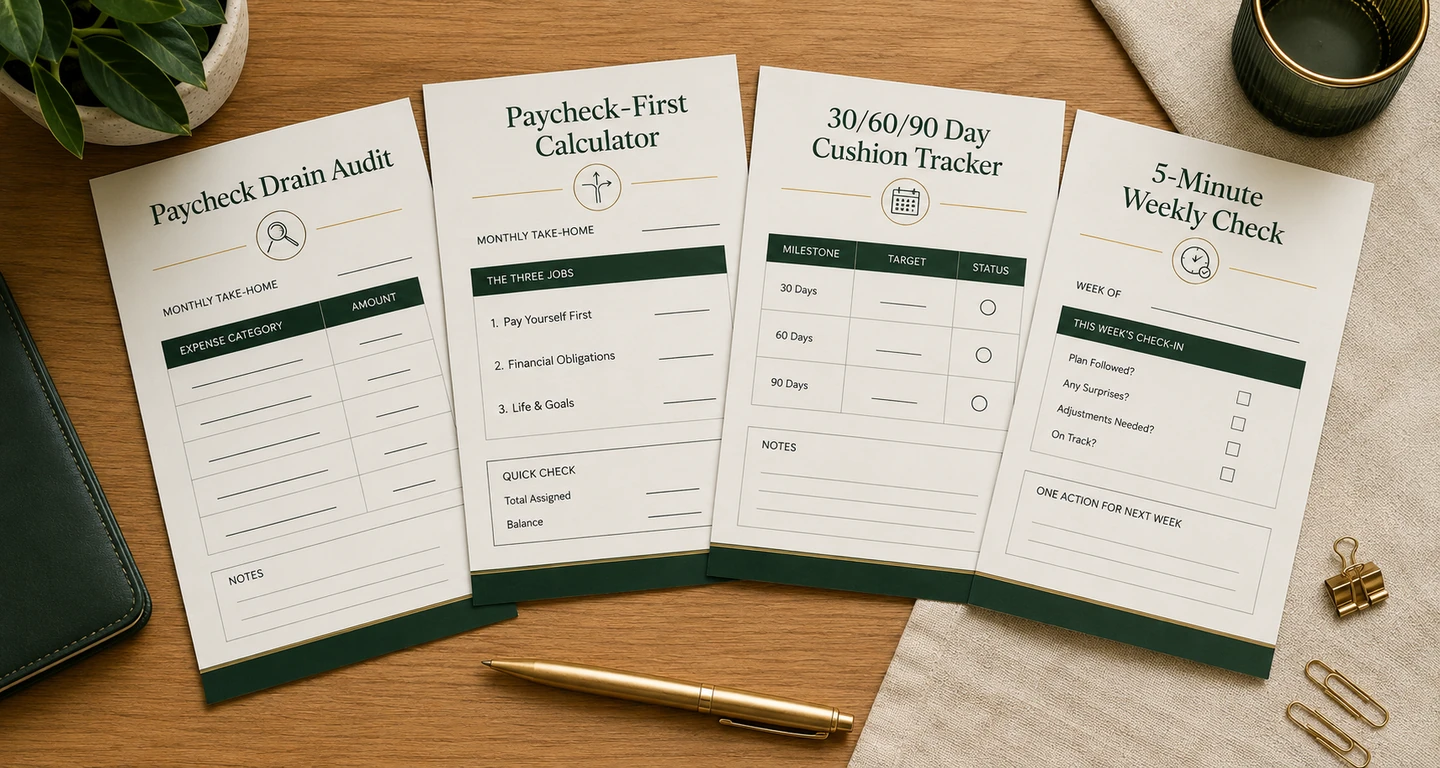
And then I answered it. Rent: move it on payday. Car payment: move it on payday. Groceries, insurance — I kept going until every obligation had a day and a dollar amount. What was left was the number I could actually spend freely. Not a budget. A routing plan. I started calling it the Paycheck-First Framework — money moves on payday, before behavior, before willpower, before anything can go wrong.
The first payday after I set it up felt almost boring. Predictable. And slowly — not dramatically — there was money left. Then a cushion.
I started sharing it with a few people in similar situations. Different incomes, different expenses. Same result every time: payday stopped feeling like a crisis.
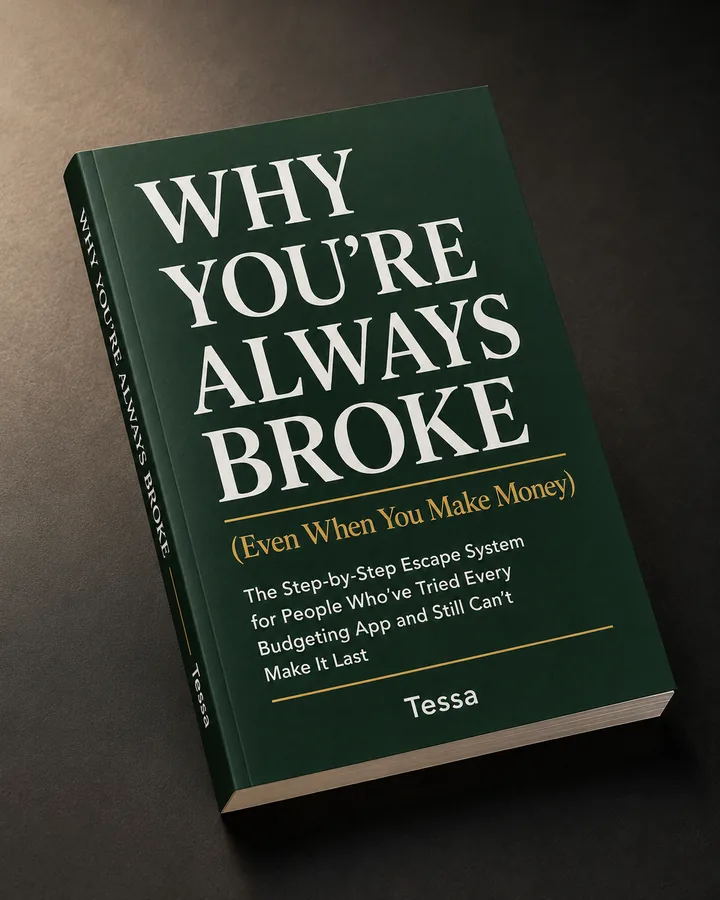
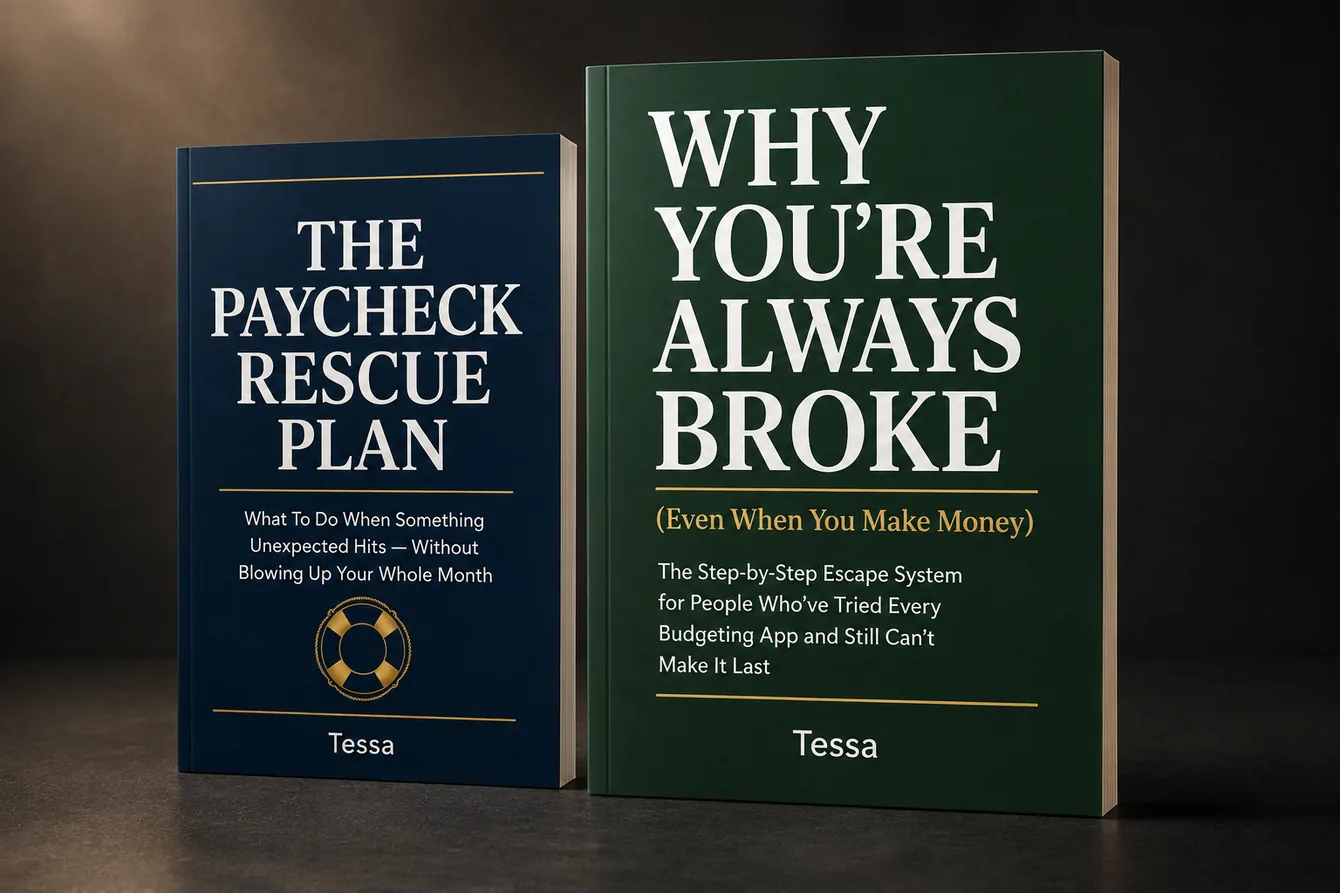
That's why I wrote Why You're Always Broke (Even When You Make Money). Not to lecture you about discipline. To give you the system that should have existed all along.
You're not bad with money. Let's prove it.
— Tessa